| If you can’t read this email - please click here | |||
 |
| 2026/06/30 | >STLI Official website | >Contact Us | >Unsubscribe |
 |
||||
 |
||||
| LATEST LEGAL NEWS | ||||
 |
||||
 |
|
| Taiwan Intellectual Property Survey Report 2025 | |
 |
|
|
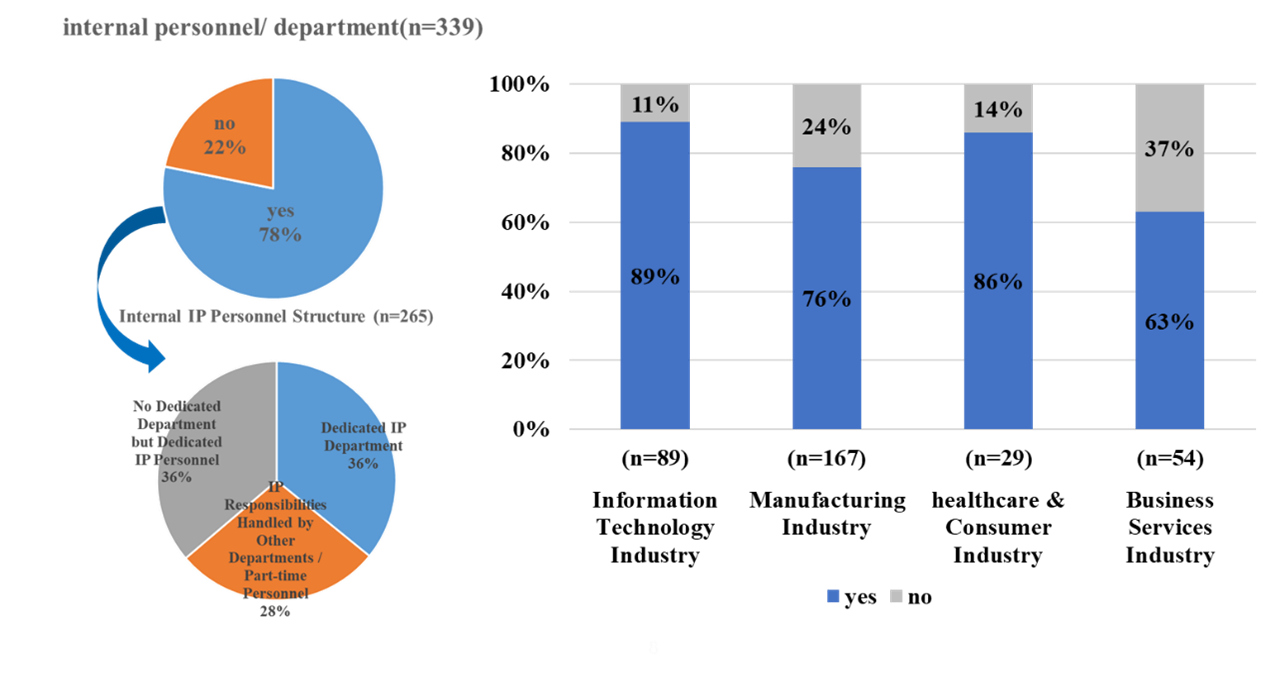
Since 2013, the Innovation & Intellectual Property Center at the Science & Technology Law Institute, Institute for Information Industry (III), has conducted biennial surveys on intellectual property (IP) management among Taiwanese listed firms. The 2025 survey collected valid responses from 339 listed companies and reveals a marked transition from task-based IP operations toward institutionalized and governance-oriented frameworks. This paper analyzes key developments, including the increasing professionalization of IP human resources, growing strategic reliance on trade secrets, industry-differentiated patterns of IP commercialization, and emerging challenges driven by ESG-related governance requirements. The study concludes with policy recommendations aimed at strengthening corporate IP governance and supporting firms’ capacity to integrate IP management into broader sustainability and competitiveness strategies. 1. Introduction Intellectual property has become a strategic component of corporate competitiveness, risk management, and sustainability reporting. As global regulatory environments evolve and supply-chain cooperation expands, firms face the dual pressure of safeguarding intangible assets and demonstrating governance capability. The 2025 IP Survey provides new insights into how Taiwanese listed firms are responding to these challenges. Compared with previous survey cycles, the 2025 results indicate a clear shift toward institutionalized IP governance, increasing resource allocation, and heightened awareness of trade secret risks. 2. Institutionalization, Professionalization, and Transparency of Corporate IP Management 2.1 Professionalization of IP human resources 78% of surveyed firms report having dedicated IP personnel or departments, and among these, 36% operate standalone IP units. The information technology industry shows the highest level of maturity, with 45% maintaining dedicated IP departments and 11% operating mid-sized IP teams (4–6 professionals). In contrast, the manufacturing and healthcare/consumer industries continue to rely more heavily on part-time or cross-departmental arrangements.
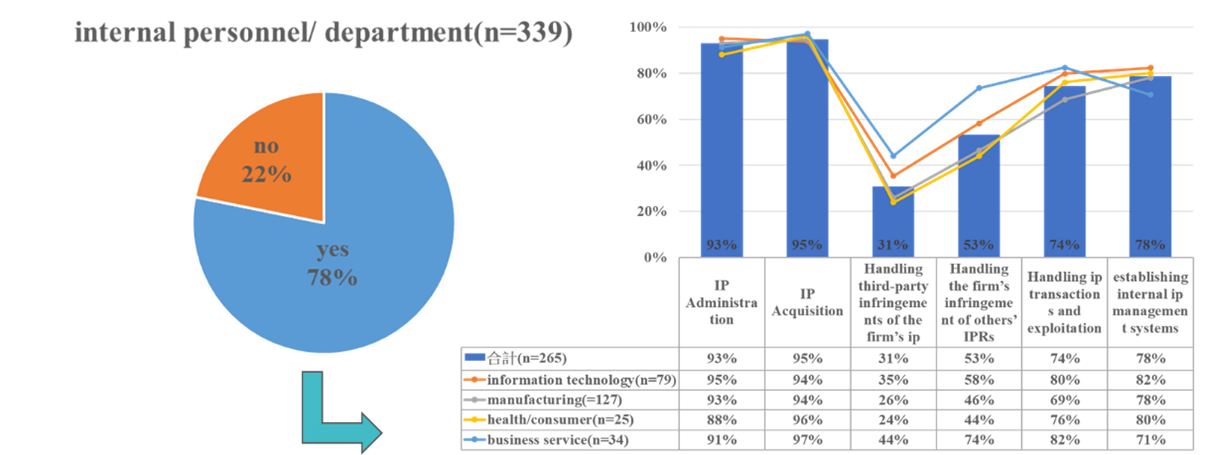
2.2 Acceleration of procedural institutionalization Among surveyed firms with IP personnel, 93% perform foundational IP processes, such as acquisition and administration. Extrapolated to the full sample, approximately 73% of all surveyed firms actively operate such processes. Additionally, roughly 80% of firms with IP personnel have established internal IP management systems and IP transactions and exploitation, equivalent to about 62% of all surveyed firms.
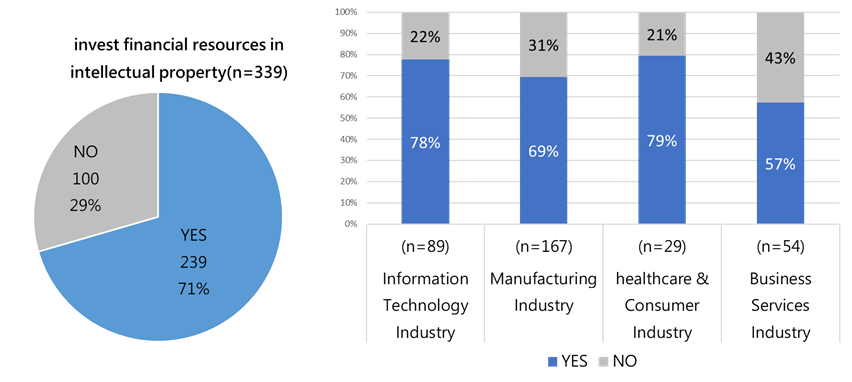
71% of surveyed firms invest financial resources in intellectual property, with the Healthcare/consumer Industry (79%) and the Information Technology Industry (78%) showing the highest levels of engagement. In addition, 60% of surveyed firms provide intellectual property education and training, primarily covering fundamental IP concepts (50%) and trade secret management systems (33%), indicating that companies are strengthening organization-wide IP literacy.
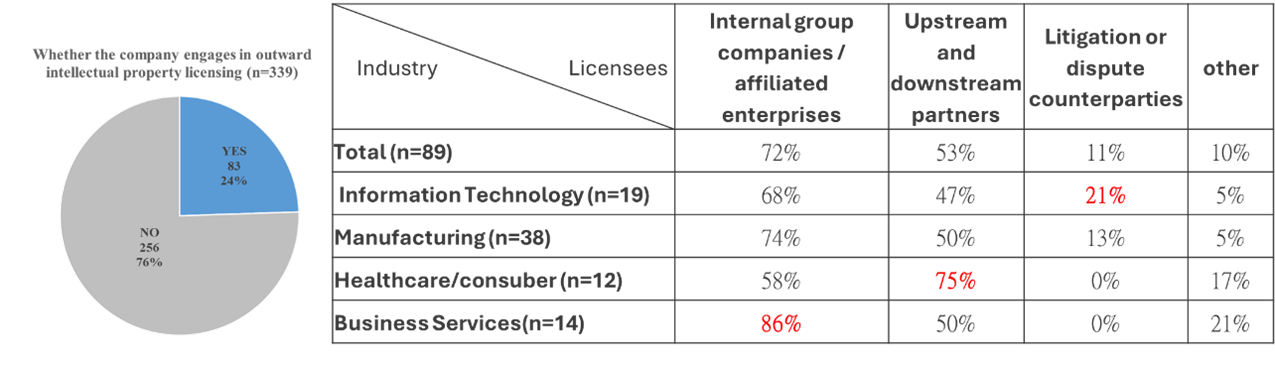
3. Limited but increasingly strategic IP licensing Although only 24 % of surveyed firms engage in IP licensing, clear differences emerge across industries: ● Business Service industry: Licensing primarily within corporate groups (86%), especially for trademarks and service models.
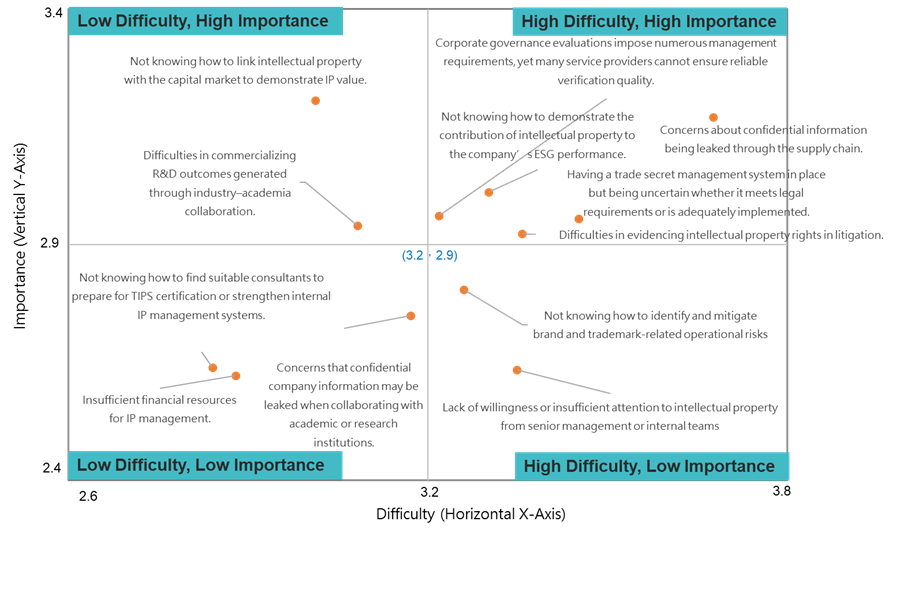
4. Strengthening IP Governance: Challenges of Trade Secrets and ESG Requirements Survey respondents highlight several governance challenges: ● Trade secret management is regarded as highly important yet difficult, particularly due to supply-chain leakage risks, uncertainty regarding legal compliance, and evidentiary burdens in litigation. Conversely, two areas are widely viewed as “important but feasible”: ● Communicating IP value, including linkage to capital markets These domains offer practical entry points for policy support and corporate capability-building.
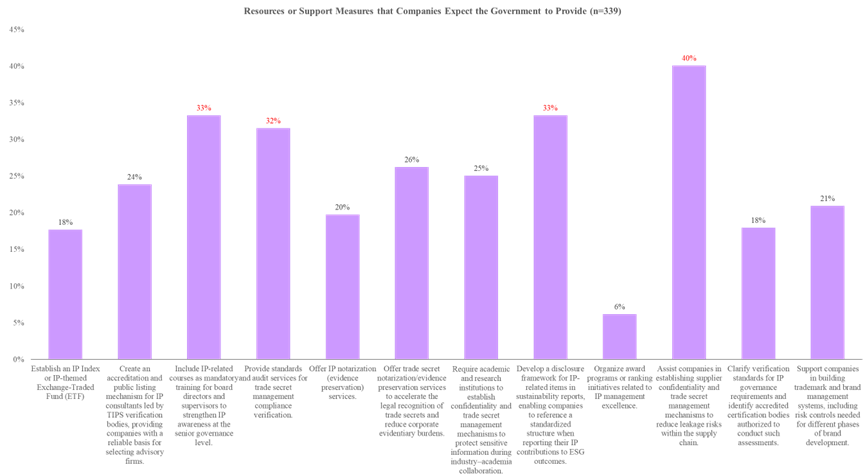
5. Conclusion and Policy Implications The 2025 survey demonstrates a decisive shift toward institutionalized, governance-oriented IP management in Taiwanese listed firms. Activities such as patent and trademark filing, trade secret identification, IP training, disclosure, and board-level reporting have all increased relative to 2023. As enterprises rely more heavily on trade secrets while simultaneously engaging in complex external collaborations, governance expectations and compliance pressures intensify. ESG-driven reporting further underscores the need for structured and evidence-based IP governance. Policy recommendations include: 1. Strengthening trade secret and supply-chain management tools through standardized audit frameworks, templates, and assessment mechanisms. Together, these measures can support enterprise resilience and reinforce the role of IP governance within Taiwan’s sustainability and innovation ecosystem.
The complete survey report can be accessed in the Taiwan Intellectual Property Management System (TIPS) website. The download link is https://www.tips.org.tw/body.asp?sno=BGCHDC#460 |
|
 |
|
 |
|
|
| From Ownership to Governance: Trade Secret Management Trends among Taiwanese Listed Companies | |
|
|
|
This article focuses on 2025 survey on the status and needs of intellectual property (IP) management among Taiwanese listed and over-the-counter companies. The findings related specifically to trade secret management, with key observations summarized as follows. 1. A Rising Share of Companies Reporting Trade Secrets, Reflecting a Shift toward Confidentiality-Based Protection The 2025 survey shows that 51% of companies report owning trade secrets. Compared with the 2023 survey, trade secrets are the only IP category showing a slight increase, while the shares of trademarks, patents, and copyrights have all declined marginally. This trend indicates that companies are increasingly relying on trade secrets to protect critical technologies, data, and operational information as part of their IP portfolios. Such a shift reflects practical business realities, including rapid R&D cycles, shortened product lifecycles, and the difficulty of fully protecting certain technologies through patent disclosure. Under these conditions, trade secrets have become a highly relied-upon protection mechanism in corporate practice.
2. Increased Identification of Trade Secrets, but Effective Protection Still Depends on Internal Management Capabilities An examination of corporate IP management activities reveals that, as companies place greater emphasis on trade secrets, the proportion of firms conducting trade secret identification and inventorying has increased markedly between 2023 and 2025. This development suggests that companies are increasingly aware that only through systematic identification can trade secret subject matter (TS assets) be clearly defined, thereby enabling subsequent measures such as classification, access control, employee training, and external disclosure management. It is important to note, however, that while trade secret-related schemes or registration mechanisms may provide incentives and structural frameworks for companies to initiate management efforts, effective protection ultimately depends on firms’ own capabilities. Specifically, companies must be able to independently identify trade secrets, maintain updated inventories, and continuously manage TS assets. In other words, external mechanisms can encourage companies to engage with trade secret issues, but the core of trade secret governance lies in internal identification and ongoing management of TS assets.
3. High Perceived Importance of Trade Secrets, Yet a Persistent Gap between Importance and Actual Implementation Although the proportion of companies reporting ownership of trade secrets has increased slightly since 2023, the survey shows that the perceived importance of trade secrets remains significantly higher than actual ownership and implementation levels. This gap suggests that while many companies recognize the strategic importance of trade secrets for competitiveness, they often lack the institutional designs and operational practices needed to support that recognition. Such gaps include deficiencies in identification procedures, unclear allocation of management responsibilities, and insufficient internal and external control measures. The result is a structural issue characterized by high awareness but incomplete implementation.
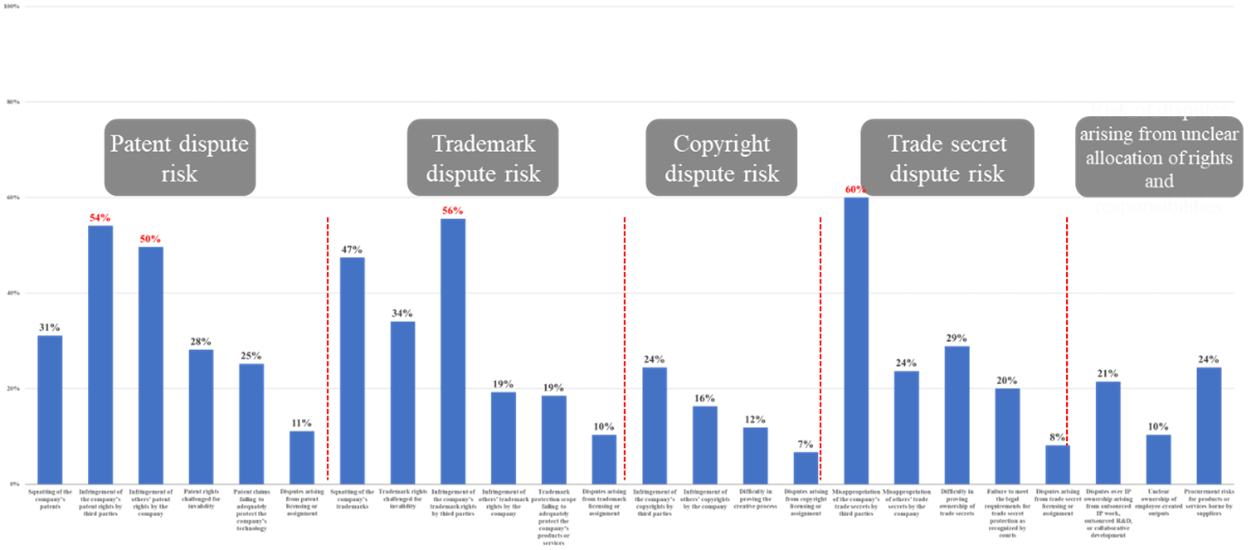
4. Trade Secrets as the Primary Source of IP Risk, with Key Challenges in Leakage Prevention and Legal Proof In terms of IP risk perception, trade secrets have become the most significant concern for companies. The risks that companies believe they are most likely to encounter include: ● Misappropriation of company trade secrets by others (60%)
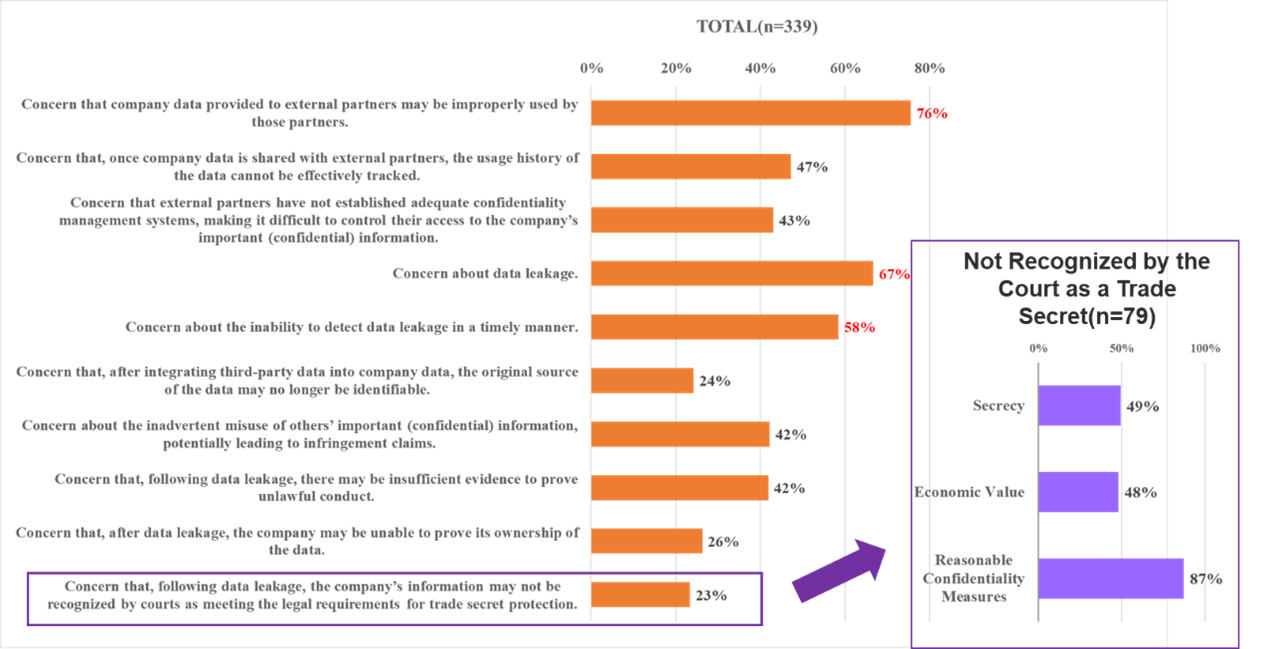
From a management perspective, the top three trade secret–related concerns are: ● 76% worry that information shared with external partners may be improperly used; In addition, companies express strong concern about whether their trade secrets would be recognized by courts as meeting the statutory requirements in the event of litigation. Among the three legal requirements for trade secret protection, “reasonable confidentiality measures” are perceived as the most difficult to satisfy (87%), whereas only about half of the respondents believe that “secrecy” and “economic value” can be adequately demonstrated. This finding highlights persistent gaps in both institutional implementation and evidentiary capability.
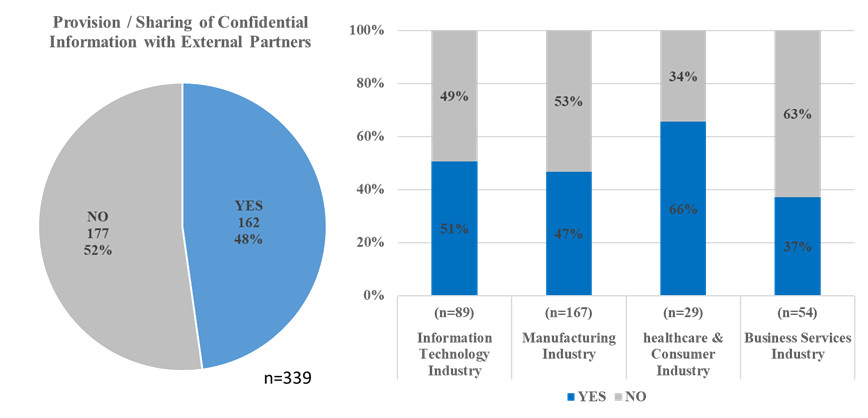
5. Expanded Trade Secret Control Requirements in External Collaboration Contexts With respect to external collaboration, 48% of companies report the need to provide or share important (confidential) information with external parties, with the highest proportion observed in the healthcare and life sciences sector (66%). Most collaboration partners are private enterprises (87%), followed by academic, legal entity, or government research institutions (46%).
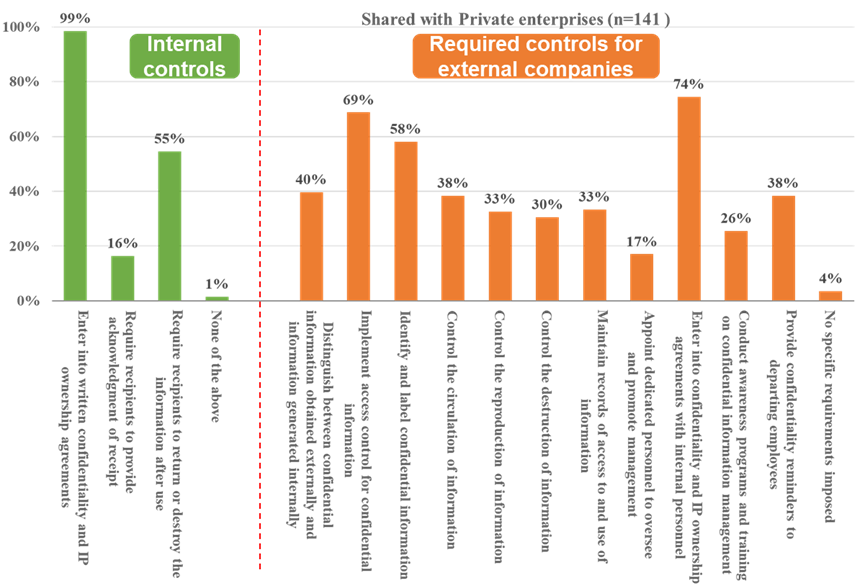
When collaborating with private enterprises, companies primarily rely on written agreements as control measures, including confidentiality and IP ownership clauses (99%) and requirements for data return or destruction after use (55%). Requirements imposed on external corporate partners focus mainly on having their personnel sign confidentiality agreements (74%) and implementing access control mechanisms (69%).
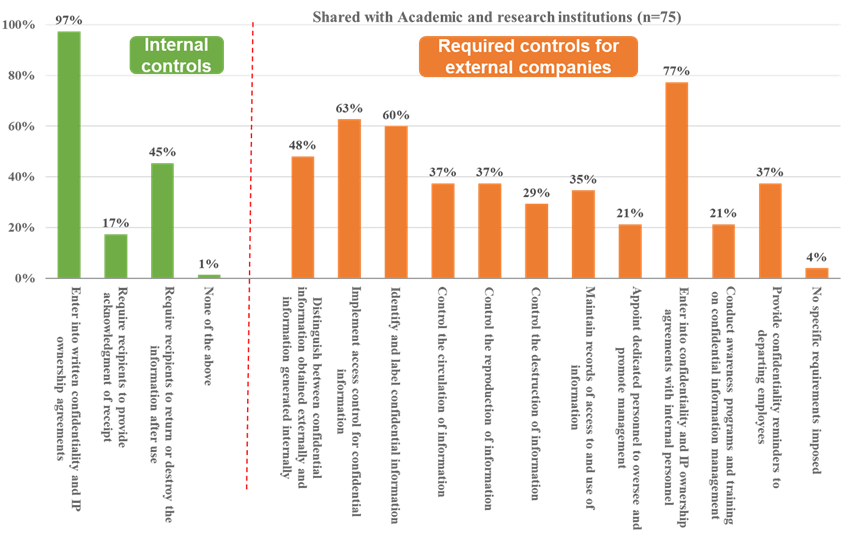
By contrast, when collaborating with academic or research institutions, companies impose even more extensive control requirements, despite adopting broadly similar management approaches. In addition to confidentiality and IP ownership agreements (97%), companies more frequently require data identification (60%), access control (63%), and training measures (21%). This reflects a widespread perception that academic and research institutions generally have less mature trade secret management systems and organizational cultures, necessitating additional safeguards.
6. Conclusion: From Identified Challenges Back to Practical Governance Frameworks Overall, the 2025 survey indicates that corporate awareness of trade secret importance and associated risks has increased substantially. Nevertheless, companies continue to face significant challenges in trade secret identification, institutional implementation, external collaboration controls, and litigation-related proof. These challenges underscore the need for institutionalized guidance and practical management tools in trade secret governance. In this regard, companies may refer to the Trade Secret Protection and Management Guidelines (https://stli.iii.org.tw/publish-detail.aspx?no=72&d=7212) issued by the Science & Technology Law Institute, III, which provide concrete frameworks and practical recommendations for both internal management and external collaboration controls. In addition, STLI’s forthcoming publication, From Management Measures to Case Analysis: A Comprehensive Review of Trade Secret Management in Academia–Industry Collaboration (https://stli.iii.org.tw/publish.aspx?no=58), will offer systematic analysis and case-based insights into trade secret risks and management practices in collaborations between companies and academic or research institutions. Together, these resources serve as important practical references for building effective trade secret management systems in both corporate and academic contexts. The complete survey report can be accessed in the Taiwan Intellectual Property Management System (TIPS) website. The download link is https://www.tips.org.tw/body.asp?sno=BGCHDC#460 |
|
|
|
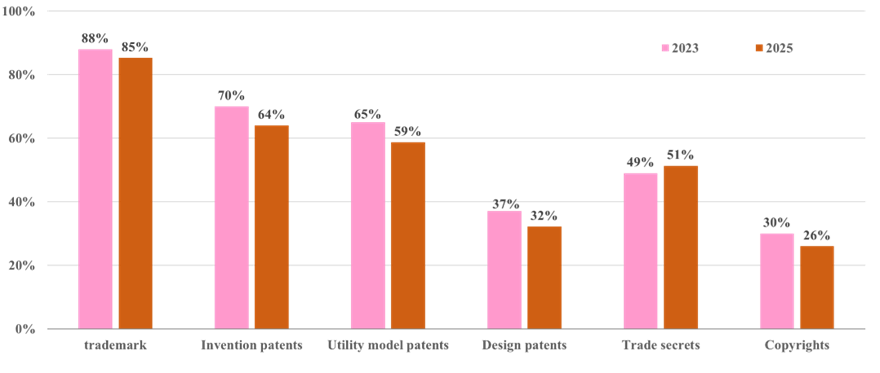 Data source: Innovation & Intellectual Property Center, Science & Technology Law Institute (STLI), Taiwan Intellectual Property Survey Report 2025.
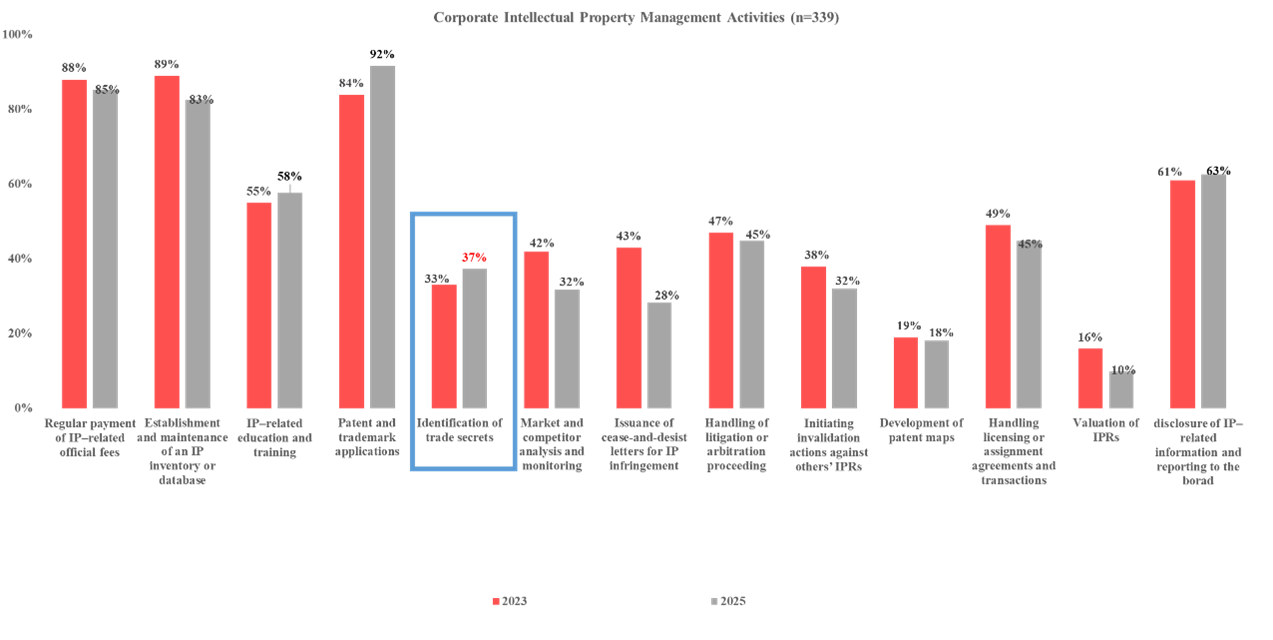 Data source: Innovation & Intellectual Property Center, Science & Technology Law Institute (STLI), Taiwan Intellectual Property Survey Report 2025.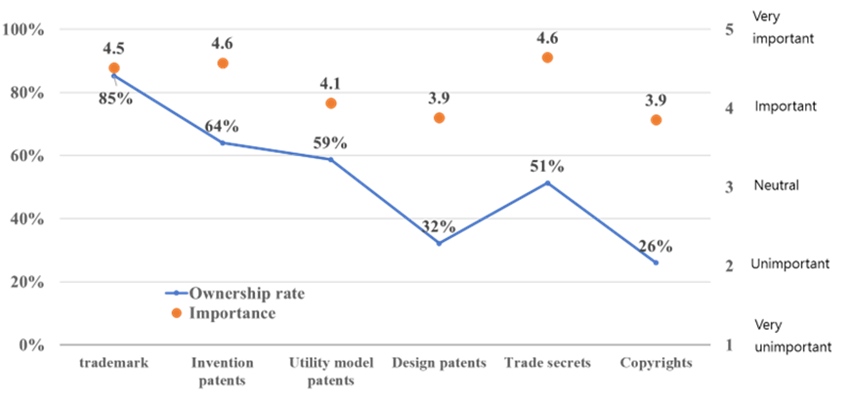
|
|
|
| Is AI-Generated Work Copyrightable? A Case Study of Thaler v. Perlmutter | |
|
|
|
The rapid proliferation of artificial intelligence (AI) systems capable of producing high-quality visual art, music, and literature has challenged the foundational paradigms of intellectual property law. A critical question has emerged: Can an AI system be recognized as an ‘author’ under existing copyright frameworks? In March 2026, the U.S. Supreme Court denied the petition for certiorari filed by Dr. Stephen Thaler, leaving undisturbed the D.C. Circuit’s holding, where human authorship was reaffirmed as required for any work to receive protection under the U.S. Copyright Act. The Factual Background The legal controversy in Thaler v. Perlmutter began when Dr. Stephen Thaler failed to register a copyright for a visual artwork titled ‘A Recent Entrance to Paradise’. In the application to the U.S. Copyright Office (USCO), Dr. Thaler disclosed that the work had been autonomously generated by an AI system known as the ‘Creativity Machine.’ Instead of claiming human creation, Thaler sought to register himself as the copyright owner under the ‘work-made-for-hire’ doctrine, arguing that the AI functioned as an employee and that he should have ownership as the machine’s owner. However, the USCO, citing the U.S. Supreme Court’s decision in Burrow-Giles Lithographic Co. v. Sarony (1884), declined Dr. Thaler’s application on the grounds that a human being did not create the work. Dr. Thaler then twice requested that the USCO reconsider its decision, asserting that the requirement of human authorship was inconsistent with both statutory and case law. Nevertheless, the USCO Review Board affirmed the initial refusal, emphasizing that federal copyright law does not protect works produced by non-human creators, machines, or autonomous algorithms without human intervention. Procedural Journey to the Federal Court 1. The rejection by the District Court and the D.C. Circuit Following the final administrative denial by USCO, Dr. Thaler sought review in the U.S. District Court for the District of Columbia. The district court granted summary judgment in favor of the USCO. First, the district court affirmed that the USCO’s denial of Dr. Thaler’s application, stating that human authorship is a foundational requirement for copyright, a principle consistently supported by both statute and case law. Second, the district court held that the work-made-for-hire doctrine did not apply because no eligible copyright existed to transfer to Thaler in the first place, even if he were the Creativity Machine’s owner. Finally, the district court ruled that Dr. Thaler had waived his argument that he should own the copyright based on his creation and use of the Creativity Machine. Dissatisfied with the district court’s ruling, Dr. Thaler appealed the decision to the U.S. Court of Appeals for the District of Columbia Circuit (D.C. Circuit). On March 18, 2025, the appellate court affirmed the summary judgment in favor of the USCO. The D.C. Circuit analyzed the statutory framework of the Copyright Act, which defines authors as human and ‘machines’ as tools. The Court reasoned that applying the following numerous provisions makes the statute textually incoherent if applied to non-human entities. For example: (1) Property ownership: Copyright ownership is fundamentally based on the author’s legal capacity to hold property, and machines cannot own property. The D.C. Circuit illustrated this structural incoherence by holding that, while none of the above individual provisions alone is a necessary condition for authorship, the statutory text, taken as a whole, is best read as making humanity an indispensable requirement. Consequently, the court ruled that the current text of the Copyright Act is best read as making humanity a necessary condition of authorship. Furthermore, the D.C. Circuit rejected Dr. Thaler’s arguments under the work-made-for-hire doctrine, ruling that regardless of employment status, an ‘original work of authorship’ must be created in the first instance by a human being to have copyright protection in the first place. 2. The Declination by the Supreme Court After being rejected by the D.C. Circuit, Dr. Thaler then filed a petition for a writ of certiorari with the Supreme Court of the United States. He contended that the USCO’s human authorship requirement is not derived from case law or statute. The authorship requirement is “agency-made” and not supported by the Copyright Act or the Constitution. He also argued that under common law property principles, a property owner owns the derivatives generated by the property. Since he created and owns the AI system, he should legally own its outputs as an inseparable addition to his property. In addition, he asserted that the exclusion of AI-generated works creates a severe chilling effect on commercial investments within the AI sector, conflicting with the constitutional purpose of promoting scientific progress. In response, the U.S. Department of Justice (DOJ) filed a brief opposing the petition and urging the Supreme Court to deny certiorari. The DOJ agreed with the lower courts’ rulings, arguing that the text and structure of the Copyright Act inherently presuppose a human author. The government emphasized that the issue presented in this case is narrow: whether an AI system may itself be treated as the ‘author’ of a copyrightable work, rather than whether works created with the assistance of AI are eligible for copyright protection. Because Dr. Thaler consistently maintained that the image was created autonomously by the Creativity Machine without any human creative contribution, the ruling below did not address the broader question of copyright protection for works created by human authors using AI tools. Ultimately, on March 2, 2026, the Supreme Court issued a summary order denying Dr. Thaler’s petition without providing further comment. Analysis and Conclusion After a long-term legal marathon, the United States Supreme Court’s denial of certiorari in Thaler v. Perlmutter reinforced the prevailing interpretation that U.S. copyright law requires human authorship. The fundamental purpose of copyright law is to protect and incentivize human intellectual creativity. Not only does the Copyright Act address that a human is required for authorship, but the USCO’s report Copyright and Artificial Intelligence Part2: Copyrightability also emphasizes that human creative contribution is necessary for a work to qualify for copyright protection. Accordingly, rather than directly replacing human authorship, AI systems should be viewed as a technological tool that assists or enhances the expression of human ideas, and works created with AI assistance may still qualify for copyright protection. However, while the Thaler case confirms, at least under the current interpretation of the U.S. Copyright Act, that copyright authorship is limited to human creators, it does not provide a definitive answer regarding the degree of human involvement required in AI-assisted works. This issue remains unsettled in both statutory law and judicial precedent. Future legislative, administrative, and judicial developments will therefore play an important role in clarifying the boundary between human authorship and AI-generated expression, and in shaping the future of copyright protection for AI-assisted creations. Concurrently, Taiwan’s Intellectual Property Office (TIPO) stated that whether content generated by generative AI models qualifies as an independent protectable work fundamentally depends on the presence of "thought and emotion" express through human spiritual creation. This administrative position demonstrates that Taiwan’s current foundational baseline closely mirrors the human-centric authorship standards reinforced by the U.S. judiciary. Instead of hastily altering statutory texts or directly transplanting foreign frameworks, it would be better for Taiwan to foster adjustments within its existing jurisprudence. By monitoring international developments and analyzing local industry practices case by case, Taiwan can gently cultivate adaptive, flexible guidelines, and can also ensure the legal system effectively finds a balance between promoting technological advancement and safeguarding the integrity of human creativity. |
|
|
|
 |
[1] Thaler v. Perlmutter, No. 23-5233, at 6 (D.C. Cir. Mar. 18, 2025), available at https://cases.justia.com/federal/appellate-courts/cadc/23-5233/23-5233-2025-03-18.pdf?ts=1742313701 (last visited 2026/06/10)
[2] Thaler v. Perlmutter, No. 23-5233, (D.C. Cir. Mar. 18, 2025).
[3] Petition for a Writ of Certiorari, Thaler v. Perlmutter, No. 25-449 (U.S. Oct. 9, 2025), available at https://www.supremecourt.gov/DocketPDF/25/25-449/379262/20251009132618528_Thaler%20v%20Perlmutter%20-%20Petition.pdf (last visited 2026/06/10)
[4] Brief for the Respondents in Opposition, Thaler v. Perlmutter, No. 25-449 (U.S. Jan. 2026), available at https://www.supremecourt.gov/DocketPDF/25/25-449/392672/20260123191420573_25-449ThalerOpp.pdf (last visited 2026/06/10)
[5] Thaler v. Perlmutter, No. 25-449, cert. denied (U.S. Mar. 2, 2026), available at https://www.supremecourt.gov/docket/docketfiles/html/public/25-449.html (last visited 2026/06/10)
[6] Finnegan, Supreme Court Declines to Hear Thaler v. Perlmutter, Leaving Human Authorship Requirement Intact, (March 5, 2026),
https://www.finnegan.com/en/insights/ip-updates/supreme-court-declines-to-hear-thaler-v-perlmutter-leaving-human-authorship-requirement-intact.html#:~: text=On%20March%202%2C%202026%2C%20the%20U.S.%20Supreme%20Court, be%20considered%20an%20%E2%80%9Cauthor%E2%80%9D%20under%20U.S.%20copyright%20law (last visited Jun 10, 2026) [7] U.S. Copyright Office Copyright and Artificial Intelligence, Part 2: Copyrightability, https://www.copyright.gov/ai/Copyright-and-Artificial-Intelligence-Part-2-Copyrightability-Report.pdf (last visited 2026/6/10)
[8] Sterne Kessler, IP Hot Topic: Cert. Denied, But One Thing is Certain: The Human Authorship Requirement for Copyright, (March 9, 2026), https://www.sternekessler.com/news-insights/client-alerts/ip-hot-topic-cert-denied-but-one-thing-is-cert-ain-the-human-authorship-requirement-for-copyright/ (last visited Jun 10, 2026)
[9] Intellectual Property Office, Ministry of Economic Affairs, Copyright Protection of Generative AI Outputs under the Copyright Act (著作權法中有關人工智慧生成物之著作權保護說明), https://www.tipo.gov.tw/tw/copyright/692-34252.html (last visited Mar. 26, 2025)
|
 |
 |
 |
 |
  |
|